

We’ve been hearing a lot of your comments and concerns lately, especially about not receiving items like eggs, milk, meat, or more gluten-free products. We want you to know that we hear you and are doing our best to meet your needs. We thought it might be helpful to shed some light on how food banks and food pantries work!
How Our Food Pantry Works
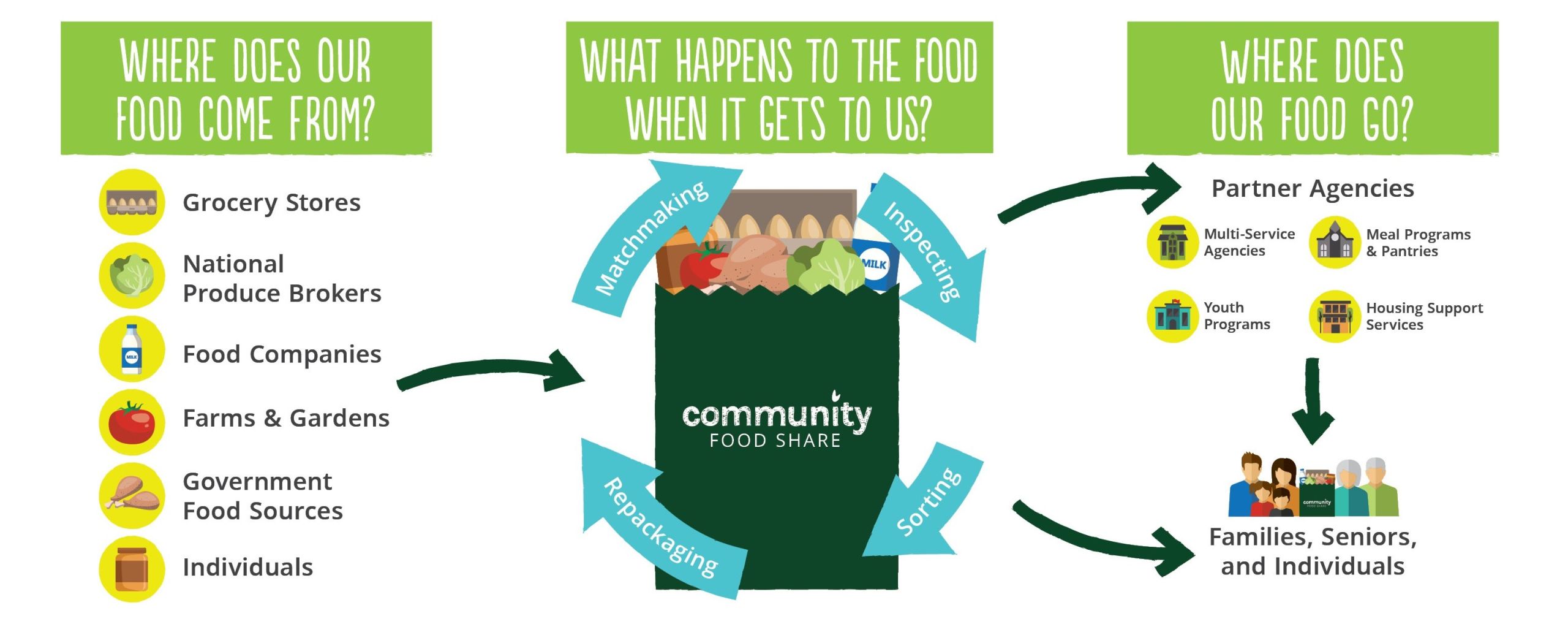
Our food pantry relies mostly on food rescue from local grocery stores and donations from farms, food producers, and individuals. This means we get a lot of our food from places that have extra or unsold items. Sometimes, we don’t always get the specific items you’re looking for because it depends on what’s available.
The Highs and Lows of Food Sourcing
Getting food for the pantry can be a bit of a rollercoaster. Some days we get a lot of great items, and other days we might not get as much. The last few years have been especially tough with sourcing food because of changes in the economy and supply chains. Grocery stores have also made changes to reduce their food waste and don’t have as much food to donate to food pantries.
Adapting to Changes
We’re always trying to adapt to these changes. When we have the money to buy food, we prioritize the items you’re asking for, like eggs, milk, meat, and gluten-free products. But we also have to make sure we’re stretching our donor dollars as far as possible to help as many people as we can.
Fundraising and Budget
We work hard to raise money so we can buy the food we need. Our budget for buying food has gone up over the years, and we’ve been able to purchase more of the items you’ve requested. But it’s a balancing act, and we have to make tough decisions sometimes.
We’re Listening
We want you to know that we’re always listening to your requests. We track what you’re asking for and take action when we have the budget to do so. Your feedback is important to us, and we’re committed to doing what we can to meet your needs.